Friday, May 31, 2013

Tomato Pruning - Best Practices

Best Tomato Plants are Grafted for Heat and Harvest

The growing season got off to a painful start this year.  Frigid temperatures in early May delayed the season by two weeks;  even now the evenings are chilled.  Early cold took its toll on several of my tomato, pepper and squash plants that normally take off and thrive.  Once a plant stunts, or shows signs of weakness it needs to be replaced by a vigorous new plant.  The first week of June is the window for this transition. New grafted varieties are the best plants for heat and increased harvest.
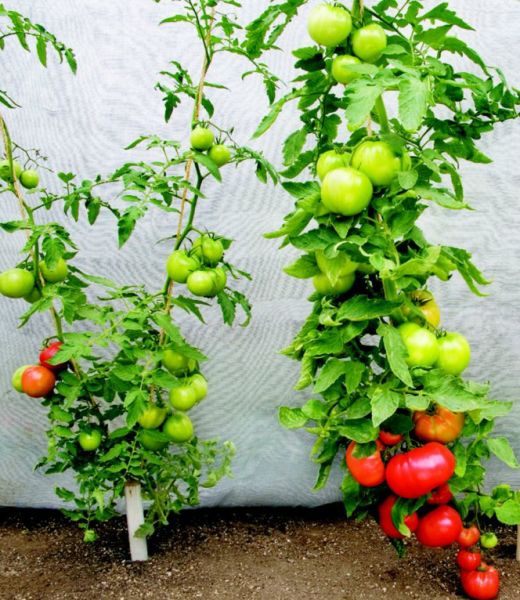

grafted tomatoes

Proper pruning of tomato plants increases the harvest dramatically


We are now grafting tomatoes just like fruit trees, grapes and roses have been for years. A grafted tomato may sound odd, but they make a difference in mountain gardens.  The most delicious tomato varieties are weak and disease prone heirlooms your grandfather grew.  By grafting these better tasting heirloom tomatoes onto a productive, disease resistant rootstock we get the best of possibilities in the garden.  Most of this years garden is dedicated to these awesome new tasty varieties.


Now we get bigger, great tasting crops on healthier, vigorous plants with greater tolerance for seasonal temperature swings while extending the growing season in both directions.  The root system on a grafted tomato grows 4-5 times larger a than regular tomato that allow lusher foliage and produce several more pounds of fruit than the tomatoes from yesteryear.


Indigo Rose grafted – The 1-2 oz cocktail sized fruits have a plummy overtone.  The traditional red meat exhibits purple skin when exposed to sun.


San Marzano grafted – One of the few tomatoes that is low in sugar and acid.  For canning, paste, and a killer spaghetti sauce, it’s hard to beat. The 4 inch long fruits are very prolific forming in clusters of 4-6 fruits.


Pineapple grafted – the best tasting right off the vine. A beefsteak type with huge fruits often striped in red and boasting fewer seeds and more solids.  Very aromatic with a fruity aftertaste, for a ‘real tomato’ experience you just can’t find with less robust, milder hybrids!


Replace slow starters and those wrecked by the cooler than usual spring.  If you add a new grafted tomato they will be planted differently than hybrids.  Do not follow the usual practice of deep planting or mulching, since roots formed on the scion lack the advantages the rootstock brings to the union. Keep the graft well above ground and pinch off any suckers from beneath the graft. Handle grafted plants gently and stake them well, providing ample support to avoid damaging the graft.


The rapid growth of a healthy tomato plant often leads to problems.  Whether grafted, heirloom or traditional your pruning techniques affect production.


A tomato is a solar powered sugar making machine. For the first month, all of the sugar a tomato produces is directed towards new foliage. During this stage, tomato plants grow very rapidly, doubling in size every 14 days. Eventually, a plant makes more sugar than the single growing tip can use, which signals the vine to make new side branches and to start blooming.  This usually happens when the vine is just over a foot tall.


If unsupported, the increasing weight of new fruit in combination with multiple side branches forces the plant down onto the ground. Once the main stem is horizontal, there is an increased tendency to branch even more. Left to its own, a vigorous indeterminate tomato plant can easily cover a 4 x 4 foot area with as many as 10 stems and  less fruiting vigor.


Prune for plant health – Suckers form in the axils between the leaves and the main stem. Encourage a strong main stem by removing all suckers below the first flower cluster; this is especially important for graphed tomatoes.


Maximize the efficiency of photosynthesis while minimizing the risk of disease. This is best accomplished by ensuring each leaf has plenty of room and is supported off the ground. When a tomato vine lies on the ground, or when its growth is extremely dense, many of its leaves are forced into permanent shade, greatly reducing the amount of sugar they produce. If a leaf uses more sugar than it makes, eventually it will yellow and drop off. A pruned and staked plant will produce larger fruit 2-3 weeks earlier than an unsupported vines.
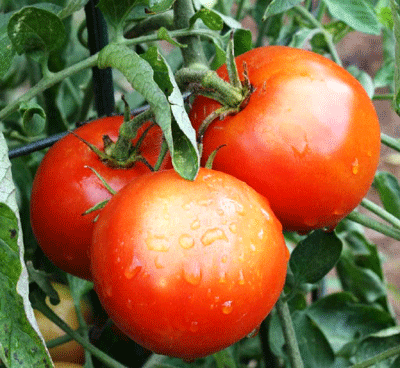

Tomato_cluster_on_the_-vineA properly pruned and supported single stem tomato presents all its leaves to the sun. Most of the sugar produced is directed to developing fruits, since the only competition is a single growing tip. The result is large fruits that are steadily produced until frost. If more stems are allowed to develop, some of this precious sugar production is diverted from the fruit to multiple growing tips.  Grow your fruits, not more tips.


‘Tomato & Vegetable Food’ 4-4-6 applied every 6 weeks insures continuous fruit success well into fall.  Keep the vines cleaned, upright and always facing the sun for problem free tomatoes that produce by the dozen.


Until next week, I’ll see you in the garden center.


http://wattersgardencenter.com/2013/tomato-pruning-best-practices/ Tomato Pruning - Best Practices

Thursday, May 30, 2013

Trees Sure to Please in Summer

As summer comes ‘round again, homeowners envision trees lining their drives, enjoying cool breezes under mature shade trees, and those same trees blocking harsh winds. In the blinding heat of summer, trees make life out-of-doors pleasant and cool.


A nice shade tree also has benefits as the seasons change.  The autumn colors can be magnificent and, in winter, bare branches allow the sun to warm a home. Additionally, landscape trees more than pay for themselves; even one nice tree increases the value of a property.


Here is a list of trees that are proven winners.  They block wind with ease, live long, have low-care requirements, suffer no bug and disease problems, and have generous canopies for cooling shade.


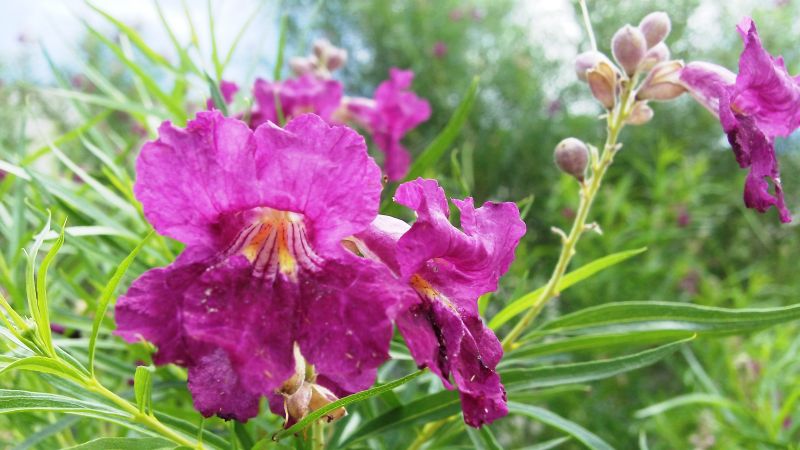
Timeless Beauty Desert Willow ~ Timeless Beauty Desert Willow treeThis willow enjoys twice the bloom time than its native relative, and it does so without bean pods dangling from its limbs. Clusters of large tubular burgundy and lavender flowers that appear at the ends of its branches are attractive to hummingbirds. Its fragrance is welcome in borders, containers, and fire wise landscapes. The ideal tree for water-challenged yards, it works well at hiding hot tubs and chain link fences.  Grows up to 20 feet tall.


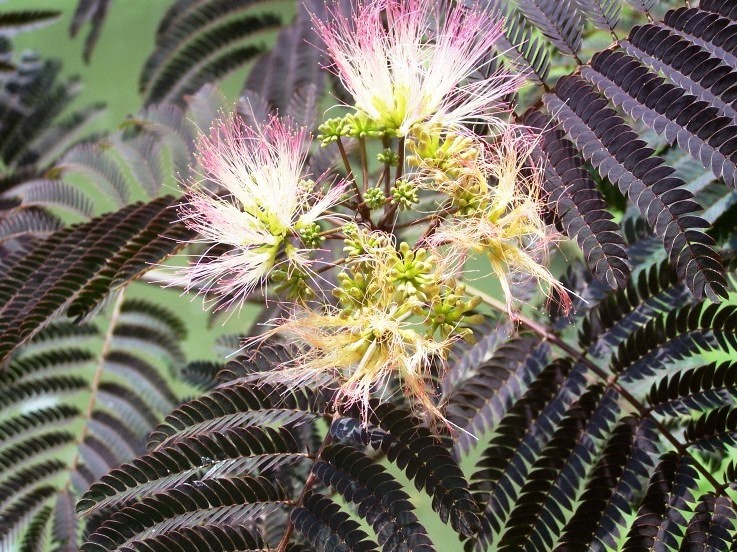
Mimosa - Summer chocolate treeChocolate Mimosa ~ A bean-less mimosa, this beauty shows off in summer with scented clusters of pink, powder puff blooms that attract butterflies.  A fast growing tree with an umbrella-shaped canopy, it erupts in spring with beautiful bronze-green foliage resembling fern fronds. The leaves then turn to a rich chocolate burgundy color and remain so throughout summer and autumn.  Grows 20 feet tall with a cooling 15-foot spread.


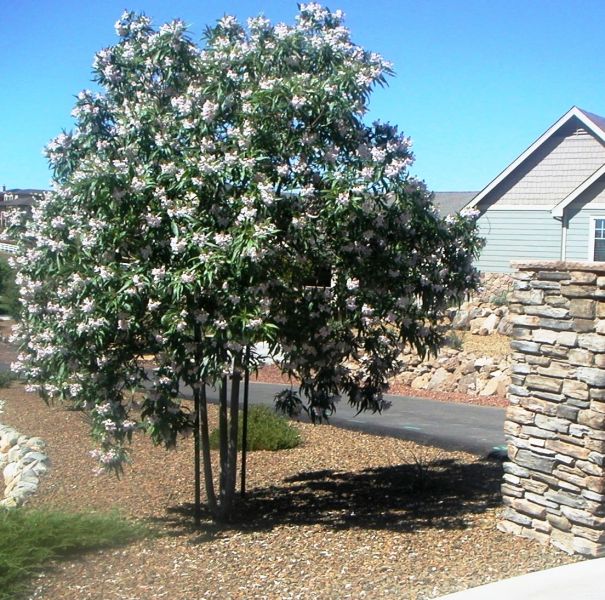
Pink Dawn Chitalpa ~ Pink Dawn Chitalpa treeA striking specimen with bright green foliage, it bears large clusters of trumpet-shaped, purple-throated flowers.  As a show-off accent tree, it easily fits within beds and borders, and is also useful as a visual screen along property lines.  It can block unwanted views without deprivation of light or air circulation. It’s an appropriate choice for augmenting xeriscapes.  Fast growing to 25 feet high.


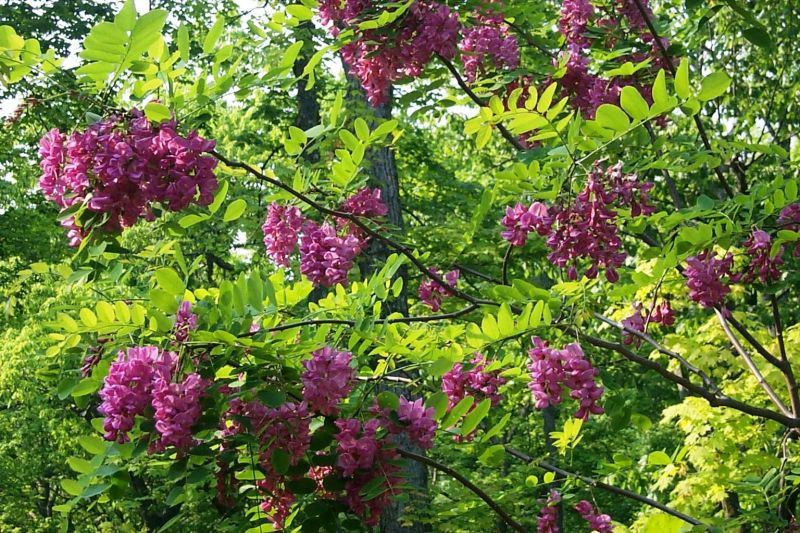
Purple robe locust tree


Purple Robe Locust ~ In spring this stunner infuses the yard with dangling wisteria-like clusters of fragrant flowers.  Its young metallic bronze-red leaves mature to beautiful blue-green foliage that provides abundant cooling shade all summer. This variety likes cold winters and harsh dry summers.  At 35′ tall by 25′ wide, it’s ideally shaped for shading a patio.


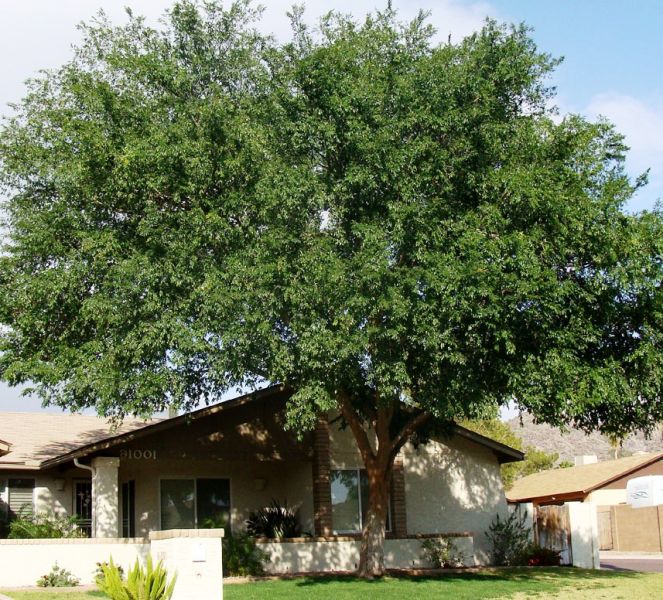
Dynasty Elm ~ elm dynasty tree shades the front yardRelated to the Prescott courthouse elms, it bears the classic upright, arching habit and dense green foliage perfect as a street tree or backyard specimen.  Autumn brings on its unique shade of orange. This tree stands 40 feet tall, is impervious to our arid winds, bright sun, and poor soil yet is highly resistant to both Dutch elm disease and elm leaf beetle.


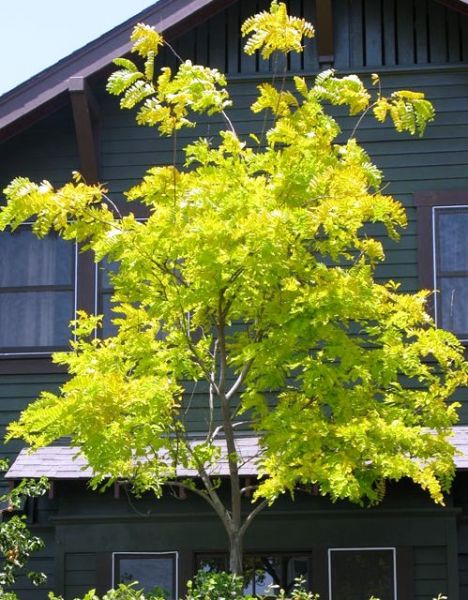
Locust sunburst honeySunburst Locust ~ With an open canopy that glows in spring with shiny gold leaves that mature to shady green in summer, this locust turns gold again in autumn. It is a superior color companion to contrasting purple leaf plums. The foliage is pleasantly soft without the thorns or beans common to other locusts. Prized for its low water consumption, it easily adapts to harsh windy landscapes and quickly grows to 30 feet tall.


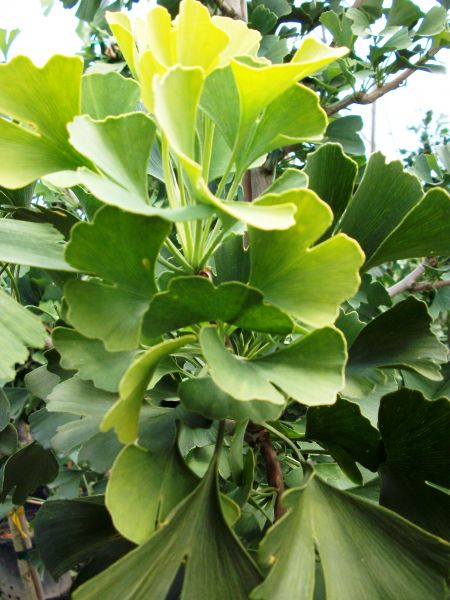
Autumn Gold Ginkgo ~ gingko autumn gold foliageIf you are looking for an indestructible tree, this deep-rooted variety is impervious to drought, poor soils, and damage from wind and snow. The leaves are an interesting fan shape that flutters in the slightest breeze.  Dark green summer foliage changes to brilliant saturated yellows through autumn; some fans suggest that its colors surpass those of the aspen. This prehistoric tree has been around since the dinosaur era and has been known to live 1000 years.  Grows up to 30 feet tall.


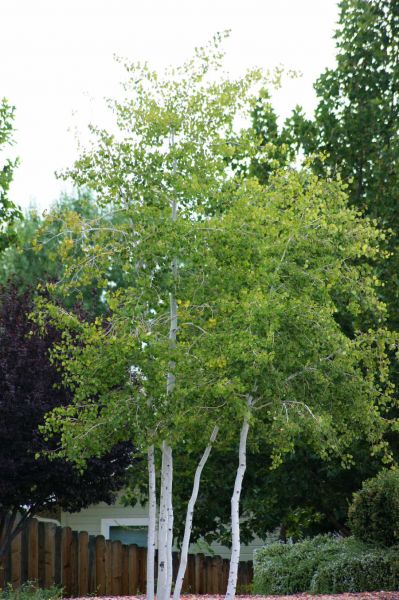
Quaking AspenQuaking Aspen ~ This tree’s dancing leaves, that glow in shades of gold in autumn, have been sources of inspiration to many writers and poets.  It is a fast grower shooting up several feet of new growth each year until it reaches its maximum height of 50 feet.  It adapts well in landscapes above 4000′. The pillar shape and its paper white bark make it attractive in rows along a driveway or in pairs to highlight vistas from a deck.


Tips for Planting Summer Trees – A tree planted in summer requires a good start and that means administering water wisely.  First, keep water usage to a minimum by sprinkling ‘Aqua Boost Crystals’ at the base of each planting hole.  Then top dress the root ball with a 3-inch layer of shredded cedar bark.  The crystals encourage deep roots, while the bark slows water evaporation.  These two simple steps should cut summer water usage by half, while supplying a newly planted tree with the water it needs.


http://wattersgardencenter.com/2013/trees-sure-to-please-in-summer/ Trees Sure to Please in Summer

Saturday, May 25, 2013

Balck Satin Blackberry

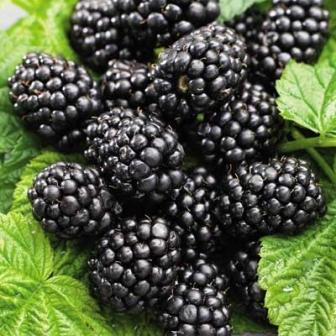
Black Satin BlackberryThere is a new variety out that is my absolute favorite for its extremely large fruits and its lack of thorns.  The Black Satin Blackberry, a prolific producer of the tastiest fruits that begin arriving in midsummer.  The plant itself is a beauty with small soft pink flowers that fade to white as they precede fruit formation on erect, thorn-less canes.  This variety allows for pain free harvest without the picker’s arms looking like a survivor of a cat fight!


http://wattersgardencenter.com/honor/balck-satin-blackberry/ Balck Satin Blackberry

Friday, May 24, 2013

Chrysler Imperial


Not the car, the old fashioned rose.


http://wattersgardencenter.com/2013/chrysler-imperial/ Chrysler Imperial

New Plants in a Garden are Like Fresh Paint on a Wall

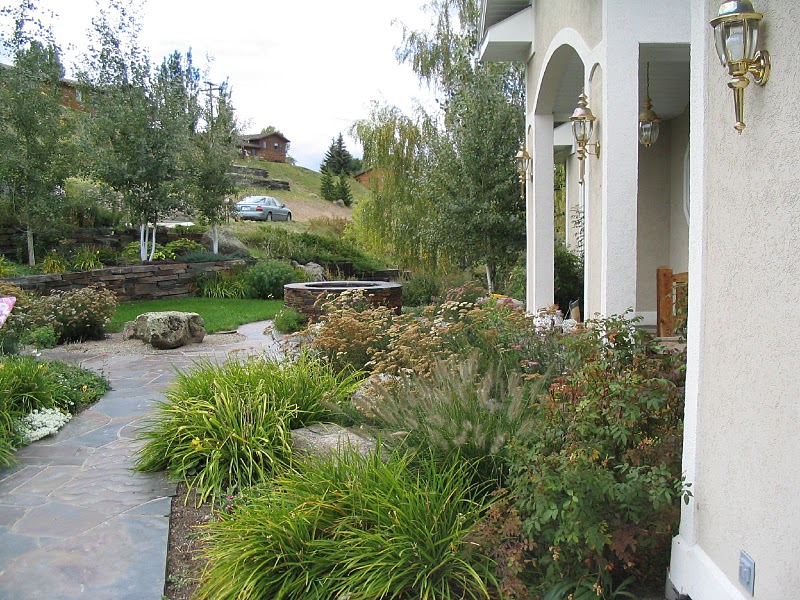
backyard landscapeMost homeowners recognize the need to remodel the insides of their homes but don’t realize that their landscaping also benefits from updating and refreshing. An old, stagnant landscape loudly declares, “Look how old and outdated I am!”  Even worse, a landscape can be like the married old codger who, on his silver wedding anniversary asked, “I said I loved her on our wedding day; why does she need to hear that I love her years later?” Your landscape can use some “spiffing up” every spring or she quickly will appear dated, unkempt, and haggard. Fresh, strategically placed plants demonstrate that you care.


The average kitchen remodel is currently at $20,000, without new appliances.  Complete renovations quickly reach the $45,000+ range.   A remodel of your landscape is quicker, easier, and cheaper than remodeling any other part of your home.  Updating is important because the landscaping is the first and the last impression guests and neighbors have of your home.


Landscape plants occasionally need to be trimmed, shaped up, or cut down. For example, hedges are meant to accent your home, not hide it. Now is a good time to cut back overgrown hedges. If necessary, cut them back by a third. They’ll be shorter and appear ugly at first, but will grow back quickly at the start of our growing season. Give them ‘All Purpose Plant Food 7-4-4‘ right after pruning and bright new leaves will emerge within a few weeks.


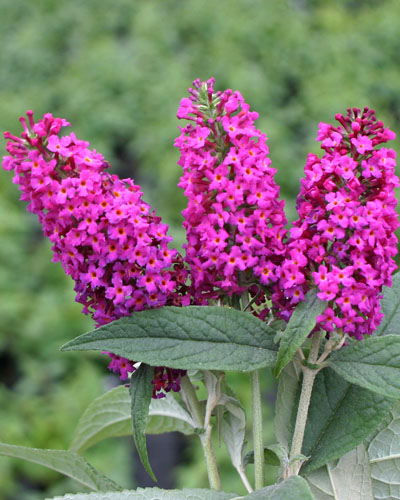
A miniature butterfly bush is a colorful, refreshing addition to any landscape.


When remodeling a landscape, keep in mind that some plants can be used to highlight the yard. Excellent plants for this purpose are the new miniature butterfly bushes. A host of blue and purple flowers adorn these showy shrubs that love our summer heat and thrive on minimal care. Butterflies drool over the six-inch flowers and their super sweet fragrance. These bushes happily take to the hottest spots in the yard, and also do well in containers, raised beds, and borders. Except for butterflies and hummingbirds, they are not attractive to wildlife; even deer do not care for the taste.


My loose definition of a weed is any plant in the yard that is unwanted.  So I say don’t be afraid to clear out and replace old tired looking plants with fresh new ones. This is especially true for plants damaged by the severe winter we had.  Many plants in the yard were brutalized or killed by January’s sustained cold.  It can take years for uglified plants to recover once they are damaged. Ugly plants can be relocated to a remote place in the yard and replaced with fresh new ones.  Spring is a time of freshness and renewal, and new plants in a yard embody this spirit. In gardening this is much like an interior designer changing the paint on the walls. Remodeling a landscape refreshes the outside appearance of a house, and it’s surprising how much better the gardener feels, too!


~~ ~~ ~~ ~~ ~~ ~~ ~~


A seasonal transition has taken place at local garden centers.  Spring blooming lilac, forsythia, mock orange and almond have been replaced with selections of showier summer shrubs.  Rose of Sharon, butterfly bushes, jasmine, Russian sage, and native yucca all show off the fragrances from their colorful blooms. They love the warmth of our late spring weather and all transplant well into summer.


~~ ~~ ~~ ~~ ~~ ~~ ~~


WATERING NEW PLANTS – Dry native soil can wick away moisture from newly planted trees and shrubs.  So for plants that have been in the ground for less than a year it is necessary to supplement your irrigation system.  Once a week hand water your new plants so the surrounding soil becomes saturated.  The additional water adds moisture to the soil surrounding the root ball and maximizes your gardening success.  Supplement with hand watering until the monsoonal patterns return in July.


~~ ~~ ~~ ~~ ~~ ~~ ~~


SHADE TREES REDUCE CRIME – The elm dynasty shades the front yardconclusion of an interesting U.S. Forest Service study showed that trees and gardens influence neighborhood crime reduction. Quoting from the results, “a 10% increase in leaf canopy was associated with a 12% drop in crime”.  “The neighborhoods that had more trees and gardens seemed to have less crime.” The study connected the dots to conclude that the more trees, the more shade . . . the more shade, the more people want to spend time outdoors . . . and the more people spending time out of doors, the more “eyes on the street” tends to deter crime.


We should start a new local campaign with the slogan: “Plant a tree, stop a crime”.


Until next week, I’ll see you at the garden center.


http://wattersgardencenter.com/2013/new-plants-in-a-garden-are-like-fresh-paint-on-a-wall/ New Plants in a Garden are Like Fresh Paint on a Wall

Thursday, May 23, 2013

Landscaping


http://wattersgardencenter.com/2013/landscaping/ Landscaping

Wednesday, May 22, 2013

Alberta Spruce Tree


Teddy Bear of the conifers


http://wattersgardencenter.com/2013/alberta-spruce-tree/ Alberta Spruce Tree